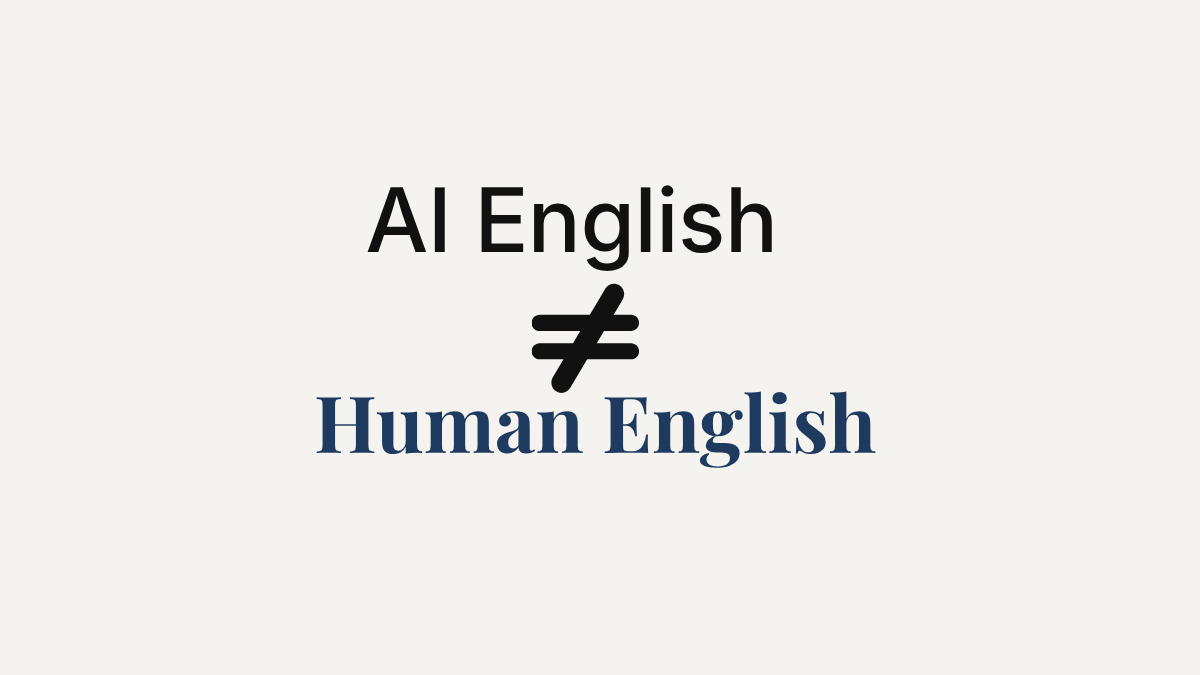
AI English vs. Human English:
What Actually Builds Fluency?
AI can generate perfect English. But it can’t be you in English.
Artificial intelligence is changing how people practice English. From chatbots to virtual avatars, learners now have more tools than ever to simulate conversation.
But there’s a critical question: Does practicing with AI actually lead to real fluency?
What AI Does Well
AI can be a helpful starting point. It offers:
-
Instant feedback
-
Unlimited practice
-
Low-pressure interaction
For vocabulary, grammar, and basic sentence formation, AI is efficient and accessible.
But fluency is not just about forming correct sentences.
Where AI Falls Short
Real communication is unpredictable.
In real conversations:
-
People interrupt
-
Responses aren’t scripted
-
You don’t have time to translate
-
You have to react in the moment
Fluency means being able to think, respond, and express yourself naturally—even when the conversation doesn’t go as expected.
AI struggles to replicate this.
It may simulate dialogue, but it cannot fully recreate:
-
the pressure of real-time interaction
-
the nuance of human responses
-
the feeling of being understood (or misunderstood)
Why Human Practice Matters
Language is social.
For most learners, English isn’t used with native speakers every day—it’s used with other non-native speakers across different countries, accents, and communication styles.
This is where real fluency develops:
-
adjusting to different speaking speed
-
navigating misunderstandings
-
building confidence through real interaction
These are skills you cannot build through simulation alone.
From Practice to Real Communication
AI can support learning. But it cannot replace the experience of real conversation.
To move from knowing English to using English, learners need:
-
real people
-
real responses
-
real communication challenges
Because fluency isn’t about getting it perfect. It’s about being able to communicate anyway.
The Bottom Line
AI is a tool.
Human interaction is the outcome.
The most effective way to build fluency is not to practice in isolation—but to engage in real conversations that reflect how English is actually used in the world today.

Pricing
Pricing is tailored based on the number of students, program structure, and level of support. Please reach out so we can learn more about your school.
🇺🇸 English
Here you'll practice the most commonly spoken phrases in everyday conversations. Listen and repeat with the audio for clear pronunciation and watch video with movie clips for intonation and context.
Here you'll practice the most commonly spoken phrases in everyday conversations. Listen and repeat with the audio for clear pronunciation and watch video with movie clips for intonation and context.
🇰🇷 Korean
일상에서 가장 자주 쓰이는 핵심 표현을 집중적으로 학습합니다.
일상에서 가장 자주 쓰이는 핵심 표현을 집중적으로 학습합니다.
오디오와 영상 자료를 통해 발음과 억양을 자연스럽게 익힙니다.
🇯🇵 Japanese
日常で最もよく使われる表現を重点的に学びます。
日常で最もよく使われる表現を重点的に学びます。
音声や動画を通して、発音やイントネーションを自然に身につけます。
🌐 Spanish
Concéntrate en las frases más utilizadas en la vida cotidiana.Aprende a usarlas de forma natural, incluyendo la pronunciación y la entonación, a través de audio y video.
Concéntrate en las frases más utilizadas en la vida cotidiana.Aprende a usarlas de forma natural, incluyendo la pronunciación y la entonación, a través de audio y video.
🇻🇳 Vietnamese
Tập trung vào những cụm từ được sử dụng thường xuyên nhất trong đời sống hàng ngày.Học cách sử dụng chúng một cách tự nhiên, bao gồm phát âm và ngữ điệu, thông qua audio và video.
Tập trung vào những cụm từ được sử dụng thường xuyên nhất trong đời sống hàng ngày.Học cách sử dụng chúng một cách tự nhiên, bao gồm phát âm và ngữ điệu, thông qua audio và video.
🇨🇳 Chinese
重点学习日常生活中最常用的表达。
重点学习日常生活中最常用的表达。
通过音频和视频,自然掌握发音和语调
🇧🇷 Portuguese
Concentre-se nas frases mais usadas no dia a dia. Aprenda a usá-las naturalmente, incluindo pronúncia e entonação, por meio de áudio e vídeo.
Concentre-se nas frases mais usadas no dia a dia. Aprenda a usá-las naturalmente, incluindo pronúncia e entonação, por meio de áudio e vídeo.
🇺🇦 Ukrainian
Зосередьтеся на найуживаніших повсякденних фразах.
Зосередьтеся на найуживаніших повсякденних фразах.
Навчіться використовувати їх природно, включаючи вимову та інтонацію, за допомогою аудіо та відео.
🌐 Arabic
ركّز على العبارات الأكثر استخدامًا في الحياة اليومية.
ركّز على العبارات الأكثر استخدامًا في الحياة اليومية.
تعلّم استخدامها بشكل طبيعي، بما في ذلك النطق والتنغيم، من خلال الصوت والفيديو.
🇵🇱 Polish
Tutaj będziesz ćwiczyć najczęściej używane zwroty w codziennych rozmowach.
Słuchaj i powtarzaj z nagraniem, aby poprawić wymowę, oraz oglądaj wideo, aby zrozumieć intonację i kontekst.
🇺🇸 English
How to Practice: Read each phrase and listen to the audio. Say each expression out loud. Focus on sounding natural, not perfect.
🇰🇷 Korean
연습하는 방법
연습하는 방법
표현을 읽고 오디오를 들어보세요.
각 표현을 소리 내어 말해 보세요.
완벽함보다 자연스러움을 목표로 하세요.
🇯🇵 Japanese
練習方法
練習方法
表現を読み、音声を聞いてください。
それぞれの表現を声に出して言ってみましょう。
完璧さよりも自然さを目指しましょう。
🌍 Spanish
Cómo practicar
Cómo practicar
Lee cada expresión y escucha el audio.
Di cada frase en voz alta.
Concéntrate en sonar natural, no perfecto.
🇻🇳 Vietnamese
Cách luyện tập
Cách luyện tập
Đọc từng cụm từ và nghe audio.
Nói mỗi câu thành tiếng.
Hãy tập trung vào sự tự nhiên, không phải sự hoàn hảo.
🇨🇳 Chinese
练习方法
练习方法
阅读每个表达并聆听音频。
大声说出每个句子。
以自然为目标,而不是追求完美。
🇧🇷 Portuguese
Como praticar
Como praticar
Leia cada expressão e ouça o áudio.
Diga cada frase em voz alta.
Concentre-se em soar natural, não perfeito.
🇺🇦 Ukrainian
Як практикувати
Як практикувати
Прочитайте кожен вираз і прослухайте аудіо.
Промовляйте кожну фразу вголос.
Зосередьтеся на природності, а не на ідеальності.
🌍Arabic
كيفية الممارسة
كيفية الممارسة
اقرأ كل عبارة واستمع إلى الصوت.
قل كل جملة بصوت عالٍ.
ركّز على أن يكون كلامك طبيعيًا، وليس مثاليًا.
🇵🇱 Polish
Jak ćwiczyć
Przeczytaj każde wyrażenie i posłuchaj nagrania.
Wypowiadaj każde wyrażenie na głos.
Skup się na naturalności, a nie na perfekcji.
🇺🇸 English
See how these expressions are used in real conversations.Pay attention to the situation and tone.
See how these expressions are used in real conversations.Pay attention to the situation and tone.
🇰🇷 Korean
실제 대화에서 이 표현이 어떻게 사용되는지 살펴보세요.
실제 대화에서 이 표현이 어떻게 사용되는지 살펴보세요.
상황과 말투에 주목해 보세요.
🇯🇵 Japanese
実際の会話でこれらの表現がどのように使われるか見てみましょう。状況や話し方に注目してください。
実際の会話でこれらの表現がどのように使われるか見てみましょう。状況や話し方に注目してください。
🌍 Spanish
Observa cómo se usan estas expresiones en conversaciones reales.Presta atención a la situación y al tono.
Observa cómo se usan estas expresiones en conversaciones reales.Presta atención a la situación y al tono.
🇻🇳 Vietnamese
Xem cách các cụm từ này được sử dụng trong hội thoại thực tế. Chú ý đến tình huống và giọng điệu.
Xem cách các cụm từ này được sử dụng trong hội thoại thực tế. Chú ý đến tình huống và giọng điệu.
🇨🇳 Chinese
看看这些表达在真实对话中是如何使用的。
看看这些表达在真实对话中是如何使用的。
注意语境和语气。
🇧🇷 Portuguese
Veja como essas expressões são usadas em conversas reais.Preste atenção à situação e ao tom.
Veja como essas expressões são usadas em conversas reais.Preste atenção à situação e ao tom.
🇺🇦 Ukrainian
Подивіться, як ці вирази використовуються в реальних розмовах.Звертайте увагу на ситуацію та тон.
Подивіться, як ці вирази використовуються в реальних розмовах.Звертайте увагу на ситуацію та тон.
🌍 Arabic
شاهد كيف تُستخدم هذه العبارات في محادثات حقيقية.
شاهد كيف تُستخدم هذه العبارات في محادثات حقيقية.
انتبه إلى الموقف ونبرة الكلام.
🇵🇱 Polish
Zobacz, jak te wyrażenia są używane w prawdziwych rozmowach.
Zwróć uwagę na sytuację i ton wypowiedzi.
🇺🇸 English
In this module, you’ll practice structuring dialogues and using the right words to communicate naturally, including exercises where you place parts of a dialogue in the correct order.
In this module, you’ll practice structuring dialogues and using the right words to communicate naturally, including exercises where you place parts of a dialogue in the correct order.
🇰🇷 Korean
이 모듈에서는 대화를 구성하고 적절한 표현을 사용하는 연습을 합니다. 일부 연습에서는 대화의 순서를 올바르게 배열하는 활동도 포함됩니다.
🇯🇵 Japanese
このモジュールでは、自然にコミュニケーションできるように会話の構成や適切な表現を練習します。一部の練習では、会話を正しい順序に並べ替える問題もあります。
🇪🇸 Spanish
En este módulo, practicarás cómo estructurar diálogos y usar las palabras adecuadas para comunicarte de forma natural, incluyendo ejercicios en los que ordenarás partes del diálogo en el orden correcto.
🇻🇳 Vietnamese
Trong mô-đun này, bạn sẽ luyện tập cách xây dựng hội thoại và sử dụng từ ngữ phù hợp để giao tiếp tự nhiên, bao gồm các bài tập sắp xếp các phần của hội thoại theo đúng thứ tự.
🇨🇳 Chinese
在本模块中,你将练习如何构建对话并使用合适的表达进行自然交流,其中包括将对话内容按正确顺序排列的练习。
🇧🇷 Portuguese
Neste módulo, você praticará como estruturar diálogos e usar as palavras certas para se comunicar naturalmente, incluindo exercícios em que você colocará partes do diálogo na ordem correta.
🇺🇦 Ukrainian
У цьому модулі ви будете практикувати побудову діалогів і використання правильних слів для природного спілкування, включаючи вправи, де потрібно розташувати частини діалогу в правильному порядку.
🌐 Arabic
في هذا القسم، ستتدرّب على بناء الحوارات واستخدام الكلمات المناسبة للتواصل بشكل طبيعي، بما في ذلك تمارين ترتيب أجزاء الحوار بالترتيب الصحيح.
🇵🇱 Polish
W tym module będziesz ćwiczyć tworzenie dialogów i używanie odpowiednich słów, aby komunikować się naturalnie, w tym zadania polegające na układaniu części dialogu we właściwej kolejności.
🇺🇸 English
Practice targeted exercises to build and strengthen your vocabulary.
Practice targeted exercises to build and strengthen your vocabulary.
Through real practice, you’ll improve both your vocabulary and communication skills..
🇰🇷 Korean
핵심 단어와 표현을 체계적으로 익힙니다.
실전 연습을 통해 어휘력과 소통 능력을 함께 키웁니다.
🇯🇵 Japanese
重要な単語や表現を体系的に身につけます。
実践的な練習を通して、語彙力とコミュニケーション力を高めます。
🌐 Spanish
Aprende de forma sistemática palabras y expresiones clave.
A través de la práctica, mejorarás tanto tu vocabulario como tu capacidad de comunicación.
🇻🇳 Vietnamese
Học các từ vựng và cách diễn đạt quan trọng một cách có hệ thống.
Thông qua luyện tập thực tế, bạn sẽ cải thiện cả vốn từ và khả năng giao tiếp.
🇨🇳 Chinese
系统学习核心词汇和表达。
通过实际练习,同时提升词汇量和沟通能力。
🇧🇷 Portuguese
Aprenda palavras e expressões essenciais de forma estruturada.
Por meio da prática, você desenvolverá seu vocabulário e suas habilidades de comunicação.
🇺🇦 Ukrainian
Системно вивчайте ключові слова та вирази.
Завдяки практичним вправам ви розвинете як словниковий запас, так і навички спілкування.
🌐 Arabic
تعلّم الكلمات والتعابير الأساسية بشكل منهجي.
من خلال الممارسة، ستطوّر مفرداتك ومهاراتك في التواصل.
🇵🇱 Polish
Ćwicz ukierunkowane zadania, aby rozwijać i wzmacniać swoje słownictwo.
Dzięki praktycznym ćwiczeniom poprawisz zarówno zasób słów, jak i umiejętności komunikacyjne.
🇺🇸 English
Listening makes up 50% of all communication. These exercises will help you improve your listening skills and become a more effective communicator in English. In these exercises, listen to the audio and choose the correct answer to the question
Listening makes up 50% of all communication. These exercises will help you improve your listening skills and become a more effective communicator in English. In these exercises, listen to the audio and choose the correct answer to the question
🇰🇷 Korean
듣기는 모든 의사소통의 50%를 차지합니다. 이 연습을 통해 듣기 능력을 향상시키고 더 효과적으로 영어로 소통할 수 있습니다. 이 연습에서는 오디오를 듣고 질문에 대한 올바른 답을 선택하세요.
🇯🇵 Japanese
リスニングはすべてのコミュニケーションの50%を占めます。これらの練習を通してリスニング力を高め、より効果的に英語でコミュニケーションできるようになります。これらの練習では、音声を聞いて質問の正しい答えを選びます。
🇪🇸 Spanish
La comprensión auditiva representa el 50% de toda la comunicación. Estos ejercicios te ayudarán a mejorar tus habilidades de escucha y a comunicarte de manera más efectiva en inglés. En estos ejercicios, escucharás un audio y elegirás la respuesta correcta a la pregunta.
🇻🇳 Vietnamese
Kỹ năng nghe chiếm 50% trong giao tiếp. Các bài tập này sẽ giúp bạn cải thiện khả năng nghe và giao tiếp hiệu quả hơn bằng tiếng Anh. Trong các bài tập này, bạn sẽ nghe audio và chọn câu trả lời đúng cho câu hỏi.
🇨🇳Chinese
听力占所有沟通的50%。这些练习将帮助你提高听力能力,更有效地用英语交流。在这些练习中,你将听音频并选择问题的正确答案。
🇧🇷 Portuguese
A escuta representa 50% de toda a comunicação. Estes exercícios vão ajudar você a melhorar suas habilidades de escuta e se comunicar de forma mais eficaz em inglês. Nestes exercícios, você ouvirá um áudio e escolherá a resposta correta para a pergunta.
🇺🇦 Ukrainian
Аудіювання становить 50% усього спілкування. Ці вправи допоможуть вам покращити навички слухання та ефективніше спілкуватися англійською. У цих вправах ви будете слухати аудіо та обирати правильну відповідь на запитання.
🌐 Arabic
يشكّل الاستماع 50٪ من جميع أشكال التواصل. ستساعدك هذه التمارين على تحسين مهارات الاستماع والتواصل بشكل أكثر فعالية باللغة الإنجليزية. في هذه التمارين، ستستمع إلى مقطع صوتي وتختار الإجابة الصحيحة على السؤال.
🇵🇱 Polish
Słuchanie stanowi 50% całej komunikacji. Te ćwiczenia pomogą Ci poprawić umiejętności słuchania i skuteczniej komunikować się po angielsku. W tych ćwiczeniach będziesz słuchać nagrania i wybierać poprawną odpowiedź na pytanie.
🇺🇸 English
Practice listening and repeating to improve your pronunciation.
Practice listening and repeating to improve your pronunciation.
These exercises will help you speak more clearly and sound more natural.
🇰🇷 Korean
듣고 따라 말하는 연습을 통해 발음을 향상시킵니다.
이 연습을 통해 더 또렷하게 말하고 자연스럽게 들리게 됩니다.
🇯🇵 Japanese
聞いて繰り返す練習を通して発音を改善します。
これらの練習により、よりはっきり話し、自然に聞こえるようになります。
🌐 Spanish
Practica escuchar y repetir para mejorar tu pronunciación.
Estos ejercicios te ayudarán a hablar con más claridad y sonar más natural
🇻🇳 Vietnamese
Luyện tập nghe và lặp lại để cải thiện phát âm.
Những bài tập này sẽ giúp bạn nói rõ ràng hơn và tự nhiên hơn.
🇨🇳 Chinese
通过听和跟读来提高发音。
这些练习将帮助你说得更清晰、更自然。
🇧🇷 Portuguese
Pratique ouvir e repetir para melhorar sua pronúncia.
Esses exercícios ajudarão você a falar com mais clareza e soar mais natural.
🇺🇦 Ukrainian
Практикуйте слухання та повторення, щоб покращити вимову.
Ці вправи допоможуть вам говорити чіткіше та звучати природніше.
🌐 Arabic
تدرّب على الاستماع والتكرار لتحسين نطقك.
ستساعدك هذه التمارين على التحدث بوضوح أكبر وأن تبدو أكثر طبيعية.
🇵🇱 Polish
Ćwicz słuchanie i powtarzanie, aby poprawić swoją wymowę.
Te ćwiczenia pomogą Ci mówić wyraźniej i brzmieć bardziej naturalnie.
🇺🇸 English
Learn common idioms and how they are used in real conversations.
Learn common idioms and how they are used in real conversations.
These expressions will help you sound more natural and understand everyday English.
🇰🇷 Korean
일상 대화에서 자주 사용되는 관용구를 익히고 그 쓰임을 배웁니다.
이 표현들은 더 자연스럽게 말하고 일상 영어를 이해하는 데 도움을 줍니다.
🇯🇵 Japanese
日常会話でよく使われる慣用句とその使い方を学びます。
これらの表現は、より自然に話し、日常英語を理解するのに役立ちます。
🌐 Spanish
Aprende modismos comunes y cómo se usan en conversaciones reales.
Estas expresiones te ayudarán a sonar más natural y entender el inglés cotidiano.
🇻🇳 Vietnamese
Học các thành ngữ phổ biến và cách sử dụng chúng trong hội thoại thực tế.
Những cách diễn đạt này sẽ giúp bạn nói tự nhiên hơn và hiểu tiếng Anh hàng ngày.
🇨🇳 Chinese
学习常见习语以及它们在真实对话中的用法。
这些表达将帮助你说得更自然,并理解日常英语。
🇧🇷 Portuguese
Aprenda expressões idiomáticas comuns e como usá-las em conversas reais.
Essas expressões ajudarão você a soar mais natural e entender o inglês do dia a dia.
🇺🇦 Ukrainian
Вивчайте поширені ідіоми та їх використання в реальних розмовах.
Ці вирази допоможуть вам звучати природніше та розуміти повсякденну англійську.
🌐 Arabic
تعلّم التعبيرات الاصطلاحية الشائعة وكيف تُستخدم في المحادثات الحقيقية.
ستساعدك هذه العبارات على أن تبدو أكثر طبيعية وأن تفهم الإنجليزية اليومية.
🇵🇱 Polish
Ucz się popularnych idiomów i tego, jak są używane w prawdziwych rozmowach.
Te wyrażenia pomogą Ci brzmieć bardziej naturalnie i lepiej rozumieć codzienny angielski.
🇺🇸 English
Continue practicing grammar for everyday conversations.
Continue practicing grammar for everyday conversations.
In this section, you’ll work with homophones to improve accuracy and understand how similar-sounding words are used in context.
🇰🇷 Korean
일상 대화를 위한 문법 연습을 계속해 보세요.
이 섹션에서는 동음이의어를 통해 비슷하게 들리는 단어를 정확하게 구별하고 문맥 속에서 사용하는 방법을 연습합니다.
🇯🇵 Japanese
日常会話のための文法練習を引き続き行いましょう。
このセクションでは、同音異義語を使って、似た音の単語を正確に区別し、文脈の中でどのように使われるかを練習します
🌐 Spanish
Continúa practicando gramática para conversaciones cotidianas.
En esta sección, trabajarás con homófonos para mejorar la precisión y comprender cómo se usan en contexto las palabras que suenan parecido.
🇻🇳 Vietnamese
Tiếp tục luyện tập ngữ pháp cho các cuộc hội thoại hằng ngày.
Trong phần này, bạn sẽ luyện tập với các từ đồng âm để cải thiện độ chính xác và hiểu cách những từ có âm giống nhau được dùng trong ngữ cảnh.
🇨🇳 Chinese
继续练习日常对话中的语法。
在本部分中,你将学习同音异义词,以提高准确性,并理解发音相似的单词在语境中的用法。
🇧🇷 Portuguese
Continue praticando gramática para conversas do dia a dia.
Nesta seção, você trabalhará com homófonos para melhorar a precisão e entender como palavras com sons parecidos são usadas no contexto.
🇺🇦 Ukrainian
Продовжуйте практикувати граматику для повсякденних розмов.
У цьому розділі ви будете працювати з омофонами, щоб покращити точність і зрозуміти, як слова зі схожим звучанням використовуються в контексті.
🌐 Arabic
واصل التدرب على القواعد للمحادثات اليومية.
واصل التدرب على القواعد للمحادثات اليومية.
في هذا القسم، ستتدرّب على الكلمات المتجانسة صوتيًا لتحسين الدقة وفهم كيفية استخدام الكلمات المتشابهة في النطق ضمن السياق.
🇵🇱 Polish
Kontynuuj ćwiczenie gramatyki do codziennych rozmów.
W tej części będziesz pracować z homofonami, aby poprawić dokładność i zrozumieć, jak podobnie brzmiące słowa są używane w kontekście.
🇺🇸 English
Let’s practice more phrases used in real-life situations.
Let’s practice more phrases used in real-life situations.
These exercises will help you sound more natural when speaking English.
🇰🇷 Korean
실제 대화에서 사용할 수 있는 표현을 더 연습해 보겠습니다.
실제 대화에서 사용할 수 있는 표현을 더 연습해 보겠습니다.
이 연습을 통해 영어로 말할 때 더 자연스럽게 들리도록 도와드립니다.
🇯🇵 Japanese
実際の会話で使える表現をさらに練習しましょう。
実際の会話で使える表現をさらに練習しましょう。
これらの練習により、英語でより自然に話せるようになります。
🌐 Spanish
Practica más frases utilizadas en situaciones reales.
Practica más frases utilizadas en situaciones reales.
Estos ejercicios te ayudarán a sonar más natural al hablar inglés..
🇻🇳 Vietnamese
Hãy luyện tập thêm các cụm từ được sử dụng trong tình huống thực tế.
Hãy luyện tập thêm các cụm từ được sử dụng trong tình huống thực tế.
Những bài tập này sẽ giúp bạn nói tiếng Anh tự nhiên hơn.
🇨🇳 Chinese
练习更多在真实情境中使用的表达。
练习更多在真实情境中使用的表达。
这些练习将帮助你在说英语时听起来更自然。
🇧🇷 Portuguese
Pratique mais frases usadas em situações reais.
Pratique mais frases usadas em situações reais.
Esses exercícios ajudarão você a soar mais natural ao falar inglês.
🇺🇦 Ukrainian
Практикуйте більше фраз, які використовуються в реальних ситуаціях.
Практикуйте більше фраз, які використовуються в реальних ситуаціях.
Ці вправи допоможуть вам звучати природніше, розмовляючи англійською.
🌐 Arabic
تدرّب على المزيد من العبارات المستخدمة في مواقف الحياة الواقعية.
تدرّب على المزيد من العبارات المستخدمة في مواقف الحياة الواقعية.
ستساعدك هذه التمارين على أن تبدو أكثر طبيعية عند التحدث باللغة الإنجليزية.
🇺🇸 English
Continue practicing the flow of everyday conversations. In this section, you’ll practice introductions.
Continue practicing the flow of everyday conversations. In this section, you’ll practice introductions.
🇰🇷 Korean
일상적인 대화의 흐름을 계속 연습해 보겠습니다.
이번에는 자기소개 상황을 연습합니다.
🇯🇵 Japanese
日常会話の流れを引き続き練習しましょう。
このセクションでは、自己紹介を練習します。
🌐 Spanish
Continúa practicando el flujo de las conversaciones cotidianas.
En esta sección, practicarás presentaciones.
🇻🇳 Vietnamese
Tiếp tục luyện tập cách diễn ra của các cuộc hội thoại hằng ngày.
Trong phần này, bạn sẽ luyện tập cách giới thiệu bản thân.
🇨🇳 Chinese
继续练习日常对话的表达流程。
在本部分中,你将练习自我介绍。
🇧🇷 Portuguese
Continue praticando o fluxo das conversas do dia a dia.
Nesta seção, você vai praticar apresentações.
🇺🇦 Ukrainian
Продовжуйте практикувати хід повсякденних розмов.
У цьому розділі ви будете практикувати самопрезентацію.
🌐 Arabic
استمر في ممارسة تدفّق المحادثات اليومية.
في هذا القسم، ستتدرّب على تقديم نفسك.
🇵🇱 Polish
W tym module będziesz pracować nad ćwiczeniami, które pomogą Ci budować dialogi i używać odpowiednich słów.
Dzięki temu będziesz komunikować się naturalnie i odpowiednio reagować w różnych sytuacjach.
🇺🇸 English
Continue building your vocabulary for everyday conversations.
In this section, you’ll practice words for countries and nationalities.
🇰🇷 Korean
일상 대화를 위한 어휘를 계속 확장해 보세요.
이 섹션에서는 국가와 국적에 관련된 단어를 연습합니다.
🇯🇵 Japanese
日常会話に必要な語彙を引き続き増やしていきましょう。
このセクションでは、国や国籍に関する単語を練習します。
🌐 Spanish
Continúa ampliando tu vocabulario para conversaciones cotidianas.
En esta sección, practicarás palabras relacionadas con países y nacionalidades.
🇻🇳 Vietnamese
Tiếp tục mở rộng vốn từ vựng cho các cuộc hội thoại hằng ngày.
Trong phần này, bạn sẽ luyện tập các từ vựng về quốc gia và quốc tịch.
🇨🇳 Chinese
继续扩展日常对话所需的词汇量。
在本部分中,你将练习与国家和国籍相关的词汇。
🇧🇷 Portuguese
Continue ampliando seu vocabulário para conversas do dia a dia.
Nesta seção, você vai praticar palavras relacionadas a países e nacionalidades.
🇺🇦 Ukrainian
Продовжуйте розширювати свій словниковий запас для повсякденних розмов. У цьому розділі ви будете практикувати слова, пов’язані з країнами та національностями.
🌐 Arabic
واصل تطوير مفرداتك للمحادثات اليومية
في هذا القسم، ستتدرّب على كلمات تتعلق بالدول والجنسيات.
🇵🇱 Polish
Kontynuuj rozwijanie słownictwa do codziennych rozmów.
W tej części będziesz ćwiczyć słowa związane z krajami i narodowościami.
🇺🇸 English
Continue building your vocabulary for everyday conversations.
Continue building your vocabulary for everyday conversations.
In this section, you’ll practice words for occupations.
🇰🇷 Korean
일상 대화를 위한 어휘를 계속 확장해 보세요.
이 섹션에서는 직업과 관련된 단어를 연습합니다.
🇯🇵 Japanese
日常会話に必要な語彙を引き続き増やしていきましょう。
このセクションでは、職業に関する単語を練習します。
🌐 Spanish
Continúa ampliando tu vocabulario para conversaciones cotidianas. En esta sección, practicarás palabras relacionadas con profesiones.
🇻🇳 Vietnamese
Tiếp tục mở rộng vốn từ vựng cho các cuộc hội thoại hằng ngày.
Trong phần này, bạn sẽ luyện tập các từ vựng về nghề nghiệp.
🇨🇳 Chinese
继续扩展日常对话所需的词汇量。
在本部分中,你将练习与职业相关的词汇。
🇧🇷 Portuguese
Continue ampliando seu vocabulário para conversas do dia a dia.
Nesta seção, você vai praticar palavras relacionadas a profissões.
🇺🇦 Ukrainian
Продовжуйте розширювати свій словниковий запас для повсякденних розмов. У цьому розділі ви будете практикувати слова, пов’язані з професіями.
🌐 Arabic
واصل تطوير مفرداتك للمحادثات اليومية.
في هذا القسم، ستتدرّب على كلمات تتعلق بالمهن.
🇵🇱 Polish
Kontynuuj rozwijanie słownictwa do codziennych rozmów.
Kontynuuj rozwijanie słownictwa do codziennych rozmów.
W tej części będziesz ćwiczyć słowa związane z zawodami.
🇺🇸 English
Listen & Repeat – Listen and repeat to practice pronunciation of similar sounds.
Listen & Repeat – Listen and repeat to practice pronunciation of similar sounds.
🇰🇷 Korean
듣고 따라 말하며 비슷한 소리의 발음을 연습해 보세요.
🇯🇵 Japanese
聞いて繰り返し、似ている音の発音を練習しましょう。
🌐 Spanish
Escucha y repite para practicar la pronunciación de sonidos similares.
🇻🇳 Vietnamese
Nghe và lặp lại để luyện phát âm các âm tương tự.
🇨🇳 Chinese
听并跟读,练习相似发音的区别。
🇧🇷 Portuguese
Ouça e repita para praticar a pronúncia de sons semelhantes.
🇺🇦 Ukrainian
Слухайте та повторюйте, щоб практикувати вимову схожих звуків.
🌐 Arabic
استمع وكرر للتدرّب على نطق الأصوات المتشابهة.
🇵🇱 Polish
Słuchaj i powtarzaj, aby ćwiczyć wymowę podobnych dźwięków.
🇺🇸 English
Continue learning how to use idioms like “break the ice” and “icebreaker” in real conversations. These expressions will help you start conversations more naturally and feel more comfortable speaking.
Continue learning how to use idioms like “break the ice” and “icebreaker” in real conversations. These expressions will help you start conversations more naturally and feel more comfortable speaking.
🇰🇷 Korean
“break the ice”, “icebreaker”와 같은 관용구를 실제 대화에서 사용하는 방법을 계속 익혀 보세요. 이 표현들은 더 자연스럽게 대화를 시작하고 편안하게 말하는 데 도움을 줍니다.
🇯🇵 Japanese
「break the ice」や「icebreaker」のような慣用句を、実際の会話でどのように使うかを引き続き学びましょう。 これらの表現は、より自然に会話を始め、リラックスして話せるように役立ちます。
🌐 Spanish
Continúa aprendiendo cómo usar modismos como “break the ice” y “icebreaker” en conversaciones reales. Estas expresiones te ayudarán a iniciar conversaciones de forma más natural y sentirte más cómodo al hablar.
🇻🇳 Vietnamese
Tiếp tục học cách sử dụng các thành ngữ như “break the ice” và “icebreaker” trong hội thoại thực tế. Những cách diễn đạt này sẽ giúp bạn bắt đầu cuộc trò chuyện tự nhiên hơn và cảm thấy thoải mái hơn khi nói.
🇨🇳 Chinese
继续学习如何在真实对话中使用像“break the ice”和“icebreaker”这样的习语。
这些表达将帮助你更自然地开始对话,并在表达时更加自信。
🇧🇷 Portuguese
Continue aprendendo como usar expressões idiomáticas como “break the ice” e “icebreaker” em conversas reais. Essas expressões ajudarão você a iniciar conversas de forma mais natural e a se sentir mais confortável ao falar.
🇺🇦 Ukrainian
Продовжуйте вивчати, як використовувати ідіоми, такі як “break the ice” та “icebreaker”, у реальних розмовах. Ці вирази допоможуть вам природніше починати розмови та почуватися впевненіше під час спілкування.
🌐 Arabic
واصل تعلّم كيفية استخدام التعبيرات الاصطلاحية مثل “break the ice” و “icebreaker” ف المحادثات الحقيقية.
ستساعدك هذه العبارات على بدء المحادثات بشكل أكثر طبيعية والشعور براحة أكبر أثناء التحدث.
🇵🇱 Polish
Kontynuuj naukę używania idiomów, takich jak “break the ice” i “icebreaker”, w prawdziwych rozmowach.
Te wyrażenia pomogą Ci naturalniej rozpoczynać rozmowy i czuć się swobodniej podczas mówienia.
🇺🇸 English
Practice grammar to build better sentence structure.
Practice grammar to build better sentence structure.
These exercises will help you express yourself clearly and accurately.
🇰🇷 Korean
문법 연습을 통해 더 나은 문장 구조를 익히세요.
이 연습을 통해 자신의 생각을 더 명확하고 정확하게 표현할 수 있습니다.
🇯🇵 Japanese
文法を練習して、より良い文の構成力を身につけましょう。
これらの練習により、自分の考えをより明確かつ正確に表現できるようになります。
🌐 Spanish
Practica la gramática para construir mejores estructuras de oraciones.
Estos ejercicios te ayudarán a expresarte con claridad y precisión.
🇻🇳 Vietnamese
Luyện tập ngữ pháp để xây dựng cấu trúc câu tốt hơn.
Những bài tập này sẽ giúp bạn diễn đạt rõ ràng và chính xác hơn.
🇨🇳 Chinese
通过练习语法来建立更好的句子结构。
这些练习将帮助你更清晰、准确地表达自己。
🇧🇷 Portuguese
Pratique gramática para construir melhores estruturas de frases.
Esses exercícios ajudarão você a se expressar com clareza e precisão.
🇺🇦 Ukrainian
Практикуйте граматику, щоб будувати кращу структуру речень.
Ці вправи допоможуть вам висловлюватися чітко та точно.
🌐 Arabic
في هذه الوحدة، ستتدرّب على كيفية بناء الحوارات واستخدام الكلمات المناسبة. سيساعدك ذلك على التفاعل بشكل طبيعي والاستجابة بشكل مناسب في مواقف مختلفة.
في هذه الوحدة، ستتدرّب على كيفية بناء الحوارات واستخدام الكلمات المناسبة. سيساعدك ذلك على التفاعل بشكل طبيعي والاستجابة بشكل مناسب في مواقف مختلفة.
🇵🇱 Polish
Ćwicz gramatykę, aby budować lepszą strukturę zdań.
Te ćwiczenia pomogą Ci wyrażać się jasno i dokładnie.
🇺🇸 English
Conversation
Listen to the audio and choose the most appropriate response.
🇰🇷 Korean
대화
오디오를 듣고 가장 적절한 응답을 고르세요.
🇯🇵 Japanese
会話
音声を聞いて、最も適切な応答を選んでください。
🇪🇸 Spanish
Conversación
Escucha el audio y elige la respuesta más adecuada.
🇻🇳 Vietnamese
Hội thoại
Nghe đoạn âm thanh và chọn câu trả lời phù hợp nhất.
🇨🇳 Chinese
会话
听音频并选择最合适的回答。
🇺🇦 Ukrainian
Розмова
Прослухайте аудіо та оберіть найбільш відповідну відповідь.
🇧🇷 Portuguese
Conversação
Ouça o áudio e escolha a resposta mais adequada.
🇸🇦 Arabic
المحادثة
استمع إلى المقطع الصوتي واختر الإجابة الأنسب.
🇵🇱 Polish
Konwersacja
Posłuchaj nagrania i wybierz najbardziej odpowiednią odpowiedź.
🇺🇸 English
Grammar
Choose the most appropriate word or phrase to fill in the blank.
🇰🇷 Korean
문법
빈칸에 들어갈 말로 가장 적절한 것을 고르세요.
🇯🇵 Japanese
文法
空欄に入る最も適切な語句を選んでください。
🇪🇸 Spanish
Gramática
Elige la palabra o frase más adecuada para completar el espacio en blanco.
🇻🇳 Vietnamese
Ngữ pháp
Chọn từ hoặc cụm từ phù hợp nhất để điền vào chỗ trống.
🇨🇳 Chinese
语法
选择最合适的词或短语填入空格。
🇺🇦 Ukrainian
Граматика
Оберіть слово або фразу, що найкраще підходить для заповнення пропуску.
🇧🇷 Portuguese
Gramática
Escolha a palavra ou expressão mais adequada para completar a lacuna.
🇸🇦 Arabic
القواعد
اختر الكلمة أو العبارة الأنسب لملء الفراغ.
🇵🇱 Polish
Gramatyka
Wybierz słowo lub wyrażenie, które najlepiej pasuje do uzupełnienia luki.
🇺🇸 English
Vocabulary
Choose the most appropriate word or phrase to fill in the blank.
🇰🇷 Korean
어휘
다음 빈칸에 들어갈 말로 가장 적절한 것을 고르세요.
🇯🇵 Japanese
語彙
次の空欄に入る最も適切な語句を選んでください。
🇪🇸 Spanish
Vocabulario
Elige la palabra o frase más adecuada para completar el espacio en blanco.
🇻🇳 Vietnamese
Từ vựng
Chọn từ hoặc cụm từ phù hợp nhất để điền vào chỗ trống.
🇨🇳 Chinese
词汇
选择最合适的词或短语填入空格。
🇺🇦 Ukrainian
Словниковий запас
Оберіть слово або фразу, що найкраще підходить для заповнення пропуску.
🇧🇷 Portuguese
Vocabulário
Escolha a palavra ou expressão mais adequada para completar a lacuna.
🇸🇦 Arabic
المفردات
اختر الكلمة أو العبارة الأنسب لملء الفراغ.
🇵🇱 Polish
Słownictwo
Wybierz słowo lub wyrażenie, które najlepiej pasuje do uzupełnienia luki.
🇺🇸 English
Listening
Listen to the audio and choose the most appropriate answer.
🇰🇷 Korean
듣기
오디오를 듣고 가장 적절한 것을 고르세요.
🇯🇵 Japanese
リスニング
音声を聞いて、最も適切なものを選んでください。
🇪🇸 Spanish
Comprensión auditiva
Escucha el audio y elige la respuesta más adecuada.
🇻🇳 Vietnamese
Nghe
Nghe đoạn âm thanh và chọn đáp án phù hợp nhất.
🇨🇳 Chinese
听力
听音频并选择最合适的答案。
🇺🇦 Ukrainian
Аудіювання
Прослухайте аудіо та оберіть найбільш відповідну відповідь.
🇧🇷 Portuguese
Compreensão auditiva
Ouça o áudio e escolha a resposta mais adequada.
🇸🇦 Arabic
الاستماع
استمع إلى المقطع الصوتي واختر الإجابة الأنسب.
🇵🇱 Polish
Słuchanie
Posłuchaj nagrania i wybierz najbardziej odpowiednią odpowiedź.
🇻🇳 Vietnamese
Chào mừng !
Hành trình học tiếng Anh của bạn bắt đầu từ đây.
Hãy luyện tập những gì bạn có thể sử dụng trong các cuộc hội thoại hằng ngày.
Bạn sẽ luyện các kỹ năng:
* Cụm từ giao tiếp hằng ngày
* Hội thoại
* Từ vựng
* Nghe
* Phát âm
* Thành ngữ
* Ngữ pháp
Trong quá trình luyện tập, chúng tôi sẽ dần hiểu trình độ của bạn
và kết nối bạn với các bài luyện tập và đối tác phù hợp.
Không áp lực—hãy bắt đầu luyện tập.
🇪🇸 Spanish
¡Bienvenido/a, !
Tu camino en inglés comienza aquí.
Empieza practicando habilidades que puedes usar en conversaciones reales.
Practicarás:
* Expresiones cotidianas
* Diálogo
* Vocabulario
* Escucha
* Pronunciación
* Modismos
* Gramática
A medida que practiques, entenderemos tu nivel de forma natural
y te conectaremos con los ejercicios y compañeros adecuados.
Sin presión—solo empieza a practicar.
🇧🇷 Portuguese (Brazil)
Bem-vindo(a), !
Sua jornada no inglês começa aqui.
Comece praticando o que você pode usar em conversas do dia a dia.
Você irá praticar:
* Expressões do dia a dia
* Diálogo
* Vocabulário
* Escuta
* Pronúncia
* Expressões idiomáticas
* Gramática
Enquanto você pratica, vamos entender seu nível naturalmente
e conectá-lo aos exercícios e parceiros certos.
Sem pressão—apenas comece a praticar.
🇵🇱 Polish
Witamy, !
Twoja nauka języka angielskiego zaczyna się tutaj.
Zacznij od praktyki, którą wykorzystasz w codziennych rozmowach.
Będziesz ćwiczyć:
* Codzienne wyrażenia
* Dialogi
* Słownictwo
* Słuchanie
* Wymowę
* Idiomy
* Gramatykę
Podczas nauki będziemy stopniowo poznawać Twój poziom
i łączyć Cię z odpowiednimi ćwiczeniami oraz partnerami do rozmów.
Bez presji—po prostu zacznij.
🇸🇦 Arabic
مرحبًا !
تبدأ رحلتك في تعلم الإنجليزية من هنا.
ابدأ بالتدرب على ما يمكنك استخدامه في المحادثات اليومية.
ستتدرب على:
* تعبيرات يومية
* الحوار
* المفردات
* الاستماع
* النطق
* التعبيرات الاصطلاحية
* القواعد
مع تقدمك في التدريب، سنتعرف على مستواك تدريجيًا
ونربطك بالتمارين وشركاء المحادثة المناسبين.
بدون ضغط—فقط ابدأ بالتدرب.
🇺🇸 English
Review these vocabulary words. Practice saying each one out loud.
Review these vocabulary words. Practice saying each one out loud.
🇰🇷 Korean
어휘 단어들을 복습하세요. 각 단어를 소리 내어 연습해 보세요.
🇯🇵 Japanese
これらの単語を復習し、それぞれ声に出して練習しましょう。
🌐 Spanish
Revisa estas palabras de vocabulario. Practica decir cada una en voz alta.
🇻🇳 Vietnamese
Ôn tập các từ vựng này. Hãy luyện nói to từng từ.
🇨🇳 Chinese
复习这些词汇,并大声练习朗读每一个单词。
🇧🇷 Portuguese
Revise estas palavras de vocabulário. Pratique dizer cada uma em voz alta.
🇺🇦 Ukrainian
Повторіть ці слова. Практикуйте вимовляти кожне з них уголос.
🌐 Arabicراجع هذه المفردات. تدرب على نطق كل كلمة بصوت عالٍ.
🇵🇱 Polish
Przejrzyj te słowa. Ćwicz wypowiadanie każdego z nich na głos.
Przejrzyj te słowa. Ćwicz wypowiadanie każdego z nich na głos.
🇺🇸 English
Listen – Listen closely to the two sounds and hear how they are different.
Listen – Listen closely to the two sounds and hear how they are different.
🇰🇷 Korean
두 소리를 주의 깊게 듣고 어떻게 다른지 확인해 보세요.
🇯🇵 Japanese
2つの音を注意深く聞いて、違いを確認しましょう。
🌐 Spanish
Escucha atentamente los dos sonidos y nota cómo son diferentes.
🇻🇳 Vietnamese
Hãy nghe kỹ hai âm và nhận ra sự khác biệt giữa chúng.
🇨🇳 Chinese
仔细听这两个发音,分辨它们的不同。
🇧🇷 Portuguese
Ouça atentamente os dois sons e perceba como são diferentes.
🇺🇦 Ukrainian
Уважно послухайте ці два звуки та визначте, чим вони відрізняються.
🌐 Arabic
تدرّب على الاستماع والتكرار لتحسين نطقاستمع جيدًا إلى الصوتين ولاحظ الفرق بينهما.
🇵🇱 Polish
Posłuchaj uważnie dwóch dźwięków i zauważ, czym się różnią.
🇺🇸 English
Listen – Listen closely to the two sounds and hear how they are different.
Listen – Listen closely to the two sounds and hear how they are different.
🇰🇷 Korean
두 소리를 주의 깊게 듣고 어떻게 다른지 확인해 보세요.
🇯🇵 Japanese
2つの音を注意深く聞いて、違いを確認しましょう。
🌐 Spanish
Escucha atentamente los dos sonidos y nota cómo son diferentes.
🇻🇳 Vietnamese
Hãy nghe kỹ hai âm và nhận ra sự khác biệt giữa chúng.
🇨🇳 Chinese
仔细听这两个发音,分辨它们的不同。
🇧🇷 Portuguese
Ouça atentamente os dois sons e perceba como são diferentes.
🇺🇦 Ukrainian
Уважно послухайте ці два звуки та визначте, чим вони відрізняються.
🌐 Arabic
تدرّب على الاستماع والتكرار لتحسين نطقاستمع جيدًا إلى الصوتين ولاحظ الفرق بينهما.
🇵🇱 Polish
Posłuchaj uważnie dwóch dźwięków i zauważ, czym się różnią.
🇺🇸 English
Listen to the tongue twister and repeat at different speeds
Listen to the tongue twister and repeat at different speeds
🇰🇷 Korean
혀 트위스터를 듣고 다양한 속도로 따라 말해 보세요.
🇯🇵 Japanese
早口言葉を聞いて、さまざまな速さで繰り返しましょう。
🌐 Spanish
Escucha el trabalenguas y repítelo a diferentes velocidades.
🇻🇳 Vietnamese
Nghe câu nói nhanh (tongue twister) và lặp lại với các tốc độ khác nhau.
🇨🇳 Chinese
听绕口令,并用不同的速度重复练习。
🇧🇷 Portuguese
Ouça o trava-língua e repita em diferentes velocidades.
🇺🇦 Ukrainian
Послухайте скоромовку та повторюйте її з різною швидкістю.
🌐 Arabic
استمع إلى الجملة السريعة (tongue twister) وكررها بسرعات مختلفة.
🇵🇱 Polish
Posłuchaj łamańca językowego i powtarzaj go w różnych tempach.
🇺🇸 English
Idioms are best learned through practice, not memorization
Idioms are best learned through practice, not memorization
• Listen to each idiom in a sentence. Say it out loud.
• Practice using it in different situations.
🇰🇷 Korean
관용 표현은 암기보다 연습을 통해 배우는 것이 가장 좋습니다.
• 각 표현이 문장에서 어떻게 사용되는지 듣고, 소리 내어 말해 보세요.
• 다양한 상황에서 직접 사용해 보세요.
🇯🇵 Japanese
イディオムは暗記ではなく、実際に使って練習することで身につきます。
• 各イディオムが文の中でどのように使われるかを聞き、声に出して言ってみましょう。
• さまざまな場面で使う練習をしましょう。
🌐 Spanish
Los modismos se aprenden mejor con la práctica, no con la memorización.
• Escucha cada modismo en una oración y dilo en voz alta.
• Practica usarlos en diferentes situaciones.
🇻🇳 Vietnamese
Thành ngữ được học tốt nhất qua thực hành, không phải ghi nhớ.
• Nghe từng thành ngữ trong câu và nói to lên.
• Luyện tập sử dụng trong các tình huống khác nhau..
🇨🇳 Chinese
习语最好通过练习来掌握,而不是死记硬背。
• 听每个习语在句子中的用法,并大声说出来。
• 在不同情境中练习使用它。
🇧🇷 Portuguese
من الأفضل تعلم التعابير الاصطلاحية من خلال الممارسة وليس الحفظ.
• استمع إلى كل تعبير في جملة وقلْه بصوت عالٍ.
• تدرب على استخدامه في مواقف مختلفة.
🇺🇦 Ukrainian
Ідіоми найкраще вивчаються через практику, а не заучування.
• Прослухайте кожен ідіом у реченні та вимовте його вголос.
• Практикуйте використання в різних ситуаціях.
🌐 Arabic
من الأفضل تعلم التعابير الاصطلاحية من خلال الممارسة وليس الحفظ.
• استمع إلى كل تعبير في جملة وقلْه بصوت عالٍ.
• تدرب على استخدامه في مواقف مختلفة.
🇵🇱 Polish
Idiomy najlepiej uczy się poprzez praktykę, a nie zapamiętywanie.
• Posłuchaj każdego idiomu w zdaniu i powiedz go na głos.
• Ćwicz używanie ich w różnych sytuacjach.
What's shaking
무슨 일이야? / 잘 지냈어?
야, 무슨 일이야? 작년 이후로 못 봤네.
Accordion Title
Accordion Description
Accordion Title
Accordion Description
Accordion Title
Accordion Description
Accordion Title
Accordion Description
Accordion Title
Accordion Description
🇺🇸 English
Level Test Guide
Take a short test to check your current English level.
Test Structure
Category | Number of Questions | Score
Speaking | 10 | 25
Grammar | 10 | 25
Vocabulary | 10 | 25
Listening | 10 | 25
Details
• Total questions: 40
• Duration: 15 minutes
• Format: Multiple choice
After the Test
• Your level is provided immediately after completion
• You will be matched with a group at your level
• You will receive practice exercises suited to your level
🇰🇷 Korean
레벨 테스트 안내
간단한 테스트로 현재 영어 실력을 확인해 보세요.
테스트 구성
영역 | 문항 수 | 점수
회화 | 10 | 25
문법 | 10 | 25
어휘 | 10 | 25
듣기 | 10 | 25
세부 정보
• 총 문항 수: 40문항
• 소요 시간: 15분
• 형식: 객관식
테스트 후
• 테스트 완료 후 바로 레벨이 제공됩니다
• 레벨에 맞는 그룹으로 매칭됩니다
• 레벨에 맞는 연습 문제가 제공됩니다
🇯🇵 Japanese
レベルテスト概要
簡単なテストで現在の英語レベルを確認しましょう。
テスト構成
セクション | 問題数 | 配点
会話 | 10 | 25
文法 | 10 | 25
語彙 | 10 | 25
リスニング | 10 | 25
詳細
• 問題数: 40問
• 所要時間: 15分
• 形式: 選択式
テスト後
• 完了後すぐにレベルが表示されます
• レベルに応じたグループにマッチされます
• レベルに合った練習にアクセスできます
🇻🇳 Vietnamese
Tổng quan bài kiểm tra
Làm bài kiểm tra nhanh để biết trình độ tiếng Anh hiện tại của bạn.
Cấu trúc bài kiểm tra
Phần | Số câu | Điểm
Hội thoại | 10 | 25
Ngữ pháp | 10 | 25
Từ vựng | 10 | 25
Nghe | 10 | 25
Chi tiết
• Tổng số câu: 40
• Thời gian: 15 phút
• Hình thức: trắc nghiệm
Sau khi hoàn thành
• Bạn sẽ nhận được kết quả ngay lập tức
• Bạn sẽ được xếp vào nhóm phù hợp
• Bạn sẽ được truy cập bài tập theo trình độ
🇪🇸 Spanish
Descripción de la evaluación
Realiza una prueba rápida para conocer tu nivel actual de inglés.
Estructura de la prueba
Sección | # Preguntas | # Puntos
Conversación | 10 | 25
Gramática | 10 | 25
Vocabulario | 10 | 25
Comprensión auditiva | 10 | 25
Detalles
• Total de preguntas: 40
• Duración: 15 minutos
• Formato: opción múltiple
Después de la prueba
• Recibirás tu nivel inmediatamente
• Serás ubicado en el grupo adecuado
• Tendrás acceso a ejercicios según tu nivel
🇨🇳 Chinese
测试概览
通过简短测试了解您当前的英语水平。
测试结构
部分 | 题目数量 | 分数
会话 | 10 | 25
语法 | 10 | 25
词汇 | 10 | 25
听力 | 10 | 25
详细信息
• 总题数:40
• 时间:15分钟
• 形式:选择题
测试后
• 完成后立即获得您的等级
• 根据水平匹配相应小组
• 解锁适合您水平的练习
🇧🇷 Portuguese
Visão geral da avaliação
Faça um teste rápido para verificar seu nível atual de inglês.
Estrutura do teste
Seção | # Perguntas | # Pontos
Conversação | 10 | 25
Gramática | 10 | 25
Vocabulário | 10 | 25
Compreensão auditiva | 10 | 25
Detalhes
• Total de perguntas: 40
• Tempo: 15 minutos
• Formato: múltipla escolha
Após o teste
• Você receberá seu nível imediatamente
• Você será direcionado ao grupo adequado
• Terá acesso a exercícios conforme seu nível
🇺🇦 Ukrainian
Огляд тесту
Пройдіть короткий тест, щоб визначити свій рівень англійської.
Структура тесту
Розділ | К-сть питань | Бали
Розмова | 10 | 25
Граматика | 10 | 25
Словниковий запас | 10 | 25
Аудіювання | 10 | 25
Деталі
• Загальна кількість питань: 40
• Час: 15 хвилин
• Формат: тест з варіантами відповідей
Після тесту
• Ви одразу отримаєте свій рівень
• Вас буде розподілено до відповідної групи
• Ви отримаєте доступ до вправ за вашим рівнем
🇸🇦 Arabic
نظرة عامة على التقييم
قم بإجراء اختبار سريع لمعرفة مستواك الحالي في اللغة الإنجليزية.
هيكل الاختبار
القسم | عدد الأسئلة | النقاط
المحادثة | 10 | 25
القواعد | 10 | 25
المفردات | 10 | 25
الاستماع | 10 | 25
التفاصيل
• إجمالي الأسئلة: 40
• الوقت: 15 دقيقة
• النوع: اختيار من متعدد
بعد الاختبار
• ستحصل على مستواك فورًا بعد الانتهاء
• سيتم وضعك في المجموعة المناسبة لمستواك
• ستحصل على تمارين تناسب مستواك
🇵🇱 Polish
Opis testu
Wykonaj krótki test, aby sprawdzić swój aktualny poziom języka angielskiego.
Struktura testu
Sekcja | Liczba pytań | Punkty
Konwersacja | 10 | 25
Gramatyka | 10 | 25
Słownictwo | 10 | 25
Słuchanie | 10 | 25
Szczegóły
• Łączna liczba pytań: 40
• Czas trwania: 15 minut
• Format: wybór wielokrotny
Po teście
• Otrzymasz swój poziom od razu po zakończeniu
• Zostaniesz dopasowany do odpowiedniej grupy
• Otrzymasz dostęp do ćwiczeń dopasowanych do Twojego poziomu
Session 1: Getting Started
Goal: Introduce yourself and start a natural conversation
Practice Phrases (from your exercises)
* “My name is [], but please call me…”
* “I go by…”
* “Nice to meet you.”
* “To break the ice, I'll start with a question...."
* "Here's an icebreaker - let's talk about.."
1. Introduce Yourself
* Where are you from?
* What do you do?
* Share one fun fact
2. Ask Follow-Up Questions
* What is it like there?
* Why did you choose that?
* Ask as many questions as you can
3. Keep the Conversation Going
* React to what others say
* Share your own experiences
* Use phrases from the Starter Pack
🇰🇷 Korean
목표: 자기소개를 하고 자연스럽게 대화를 시작하기
연습 표현 (연습 문제에서)
* “제 이름은 []이지만, 편하게 []라고 불러 주세요…”
* “저는 []라고 불려요…”
* “만나서 반가워요.”
* “분위기를 풀기 위해 질문 하나로 시작할게요…”
* “아이스브레이커로 이 주제에 대해 이야기해볼까요…”
1. 자기소개하기
* 어디에서 왔나요?
* 무엇을 하시나요?
* 재미있는 사실 하나를 공유해 보세요
2. 후속 질문하기
* 그곳은 어떤가요?
* 왜 그것을 선택했나요?
* 가능한 한 많은 질문을 해보세요
3. 대화 이어가기
* 다른 사람이 말한 것에 반응하세요
* 자신의 경험을 공유하세요
* Starter Pack의 표현을 사용해 보세요
🇯🇵 Japanese
目標: 自己紹介をして自然な会話を始める
練習フレーズ(練習より)
* 「私の名前は[]ですが、[]と呼んでください…」
* 「私は[]と呼ばれています…」
* 「はじめまして。」
* 「アイスブレイクとして質問から始めます…」
* 「アイスブレーカーとして、この話題について話しましょう…」
1. 自己紹介する
* 出身はどこですか?
* 何をしていますか?
* 面白いことを一つ教えてください
2. フォローアップ質問をする
* そこはどんなところですか?
* なぜそれを選びましたか?
* できるだけ多く質問しましょう
3. 会話を続ける
* 相手の話に反応しましょう
* 相手の話に反応しましょう
* 自分の経験を共有しましょう
* Starter Packのフレーズを使いましょう
🇪🇸 Spanish
Objetivo: Presentarte y comenzar una conversación natural
Frases de práctica (de tus ejercicios)
* “Mi nombre es [], pero puedes llamarme…”
* “Me llaman…”
* “Mucho gusto.”
* “Para romper el hielo, empezaré con una pregunta…”
* “Aquí va un rompehielos—hablemos sobre…”
1. Preséntate
* ¿De dónde eres?
* ¿A qué te dedicas?
* Comparte un dato interesante
2. Haz preguntas de seguimiento
* ¿Cómo es ese lugar?
* ¿Por qué elegiste eso?
* Haz tantas preguntas como puedas
3. Mantén la conversación
* Reacciona a lo que dicen los demás
* Reacciona a lo que dicen los demás
* Comparte tus experiencias
* Usa frases del Starter Pack
🇻🇳 Vietnamese
Mục tiêu: Giới thiệu bản thân và bắt đầu cuộc trò chuyện tự nhiên
Cụm từ luyện tập (từ bài अभ्यास)
* “Tên tôi là [], nhưng bạn có thể gọi tôi là…”
* “Mọi người gọi tôi là…”
* “Rất vui được gặp bạn.”
* “Để phá băng, tôi sẽ bắt đầu với một câu hỏi…”
* “Đây là một câu hỏi mở đầu—hãy nói về…”
1. Giới thiệu bản thân
* Bạn đến từ đâu?
* Bạn làm gì (học tập/công việc)?
* Chia sẻ một điều thú vị về bạn
2. Đặt câu hỏi tiếp theo
* Nơi đó như thế nào?
* Tại sao bạn chọn điều đó?
* Hãy đặt càng nhiều câu hỏi càng tốt
3. Duy trì cuộc trò chuyện
* Phản hồi những gì người khác nói
* Phản hồi những gì người khác nói
* Chia sẻ trải nghiệm của bạn
* Sử dụng các cụm từ từ Starter Pack
🇨🇳 Chinese
目标: 介绍自己并开始自然的对话
练习表达(来自练习)
* “我叫[],不过你可以叫我…”
* “大家都叫我…”
* “很高兴认识你。”
* “为了打破僵局,我先问一个问题…”
* “这里有一个破冰问题——我们来聊聊…”
1. 自我介绍
* 你来自哪里?
* 你是做什么的?
* 分享一个有趣的事情
2. 提出后续问题
* 那里怎么样?
* 你为什么选择这个?
* 尽可能多地提问
3. 继续对话
* 对他人的发言做出回应
* 对他人的发言做出回应
* 分享你的经历
* 使用Starter Pack中的表达
🇧🇷 Portuguese
Objetivo: Apresentar-se e iniciar uma conversa natural
Frases de prática (dos exercícios)
* “Meu nome é [], mas pode me chamar de…”
* “Eu sou chamado de…”
* “Prazer em conhecer você.”
* “Para quebrar o gelo, vou começar com uma pergunta…”
* “Aqui vai um quebra-gelo—vamos falar sobre…”
1. Apresente-se
* De onde você é?
* O que você faz?
* Compartilhe um fato interessante
2. Faça perguntas de acompanhamento
* Como é esse lugar?
* Por que você escolheu isso?
* Faça o máximo de perguntas possível
3. Mantenha a conversa
* Reaja ao que os outros dizem
* Reaja ao que os outros dizem
* Compartilhe suas experiências
* Use frases do Starter Pack
🇵🇱 Polish
Cel: Przedstawić się i rozpocząć naturalną rozmowę
Wyrażenia do ćwiczeń (z materiałów)
* „Nazywam się [], ale możesz mówić do mnie…”
* „Mówią na mnie…”
* „Miło mi cię poznać.”
* „Żeby przełamać lody, zacznę od pytania…”
* „Na rozgrzewkę—porozmawiajmy o…”
1. Przedstaw się
* Skąd jesteś?
* Czym się zajmujesz?
* Podziel się jedną ciekawostką
2. Zadawaj pytania
* Jak tam jest?
* Dlaczego to wybrałeś/aś?
* Zadawaj jak najwięcej pytań
3. Podtrzymuj rozmowę
* Reaguj na to, co mówią inni
* Reaguj na to, co mówią inni
* Dziel się swoimi doświadczeniami
* Używaj wyrażeń ze Starter Pack
🇸🇦 Arabic
الهدف: عرّف عن نفسك وابدأ محادثة طبيعية
عبارات للتدريب (من التمارين
“اسمي []، لكن يمكنك مناداتي بـ…”
* “يناديني الناس بـ…”
* “سعيد/ة بلقائك.”
* “لكسر الجمود، سأبدأ بسؤال…”
* “إليك سؤالًا لكسر الجمود—لنتحدث عن…”
1. عرّف عن نفسك
* من أين أنت؟
* ماذا تفعل؟
* شارك معلومة ممتعة عن نفسك
2. اطرح أسئلة متابعة
كيف هو المكان هناك؟
* لماذا اخترت ذلك؟
* اطرح أكبر عدد ممكن من الأسئلة
3. استمر في المحادثة
* تفاعل مع ما يقوله الآخرون
* تفاعل مع ما يقوله الآخرون
* شارك تجاربك
* استخدم عبارات من Starter Pack
Created with